
Next week for Come Follow Me (CFM), I will be featured on the Come Study with Me Podcast. I wanted to share some of the notes that I had prepared for the Podcast. So, basically, my version of the show notes. (Because you ALWAYS prepare much more than you record/teach, etc.)
At the beginning of the show, I said, “scripture unlocks scripture”. It’s something that I’ve been routinely telling my classes. I had prepared a bunch of scriptures to help with this discussion, but didn’t use them, so I’ll share them here for your CFM study this week.
First, In Isaiah 13: 2-3, the prophet uses some very beautiful temple language. He also uses the phrase, “lift ye up a banner upon the high mountain”. There are some beautiful scriptures that unlock what Isaiah meant by the banner to lift up.
- D&C 45: 9 – the everlasting covenant is the ensign
- 2 Ne. 29: 2 – the Book of Mormon is a standard
- Zechariah 9:16 – His people shall be
- D&C 113: 6 – Joseph Smith and the Priesthood Keys
Secondly, these chapters show an amazing example of the time period that we live in. For that time period, I will use the parable of the wheat and the tares. Here are the scriptures that I would use to teach that parable in connection with the Isaiah chapters this week.
- Matthew 13: 36-43 – the original parable
- Doctrine and Covenants 86 – the meaning of the parable
- Doctrine and Covenants 101: 64-68 – more about the gathering and where to put the wheat.
- Elder David A Bednar, Honorably Hold a Name and Standing, April 2009 – explains what the garners are
So, as things are getting prepared for the Savior’s return, there will be two ways to face it. Isaiah is very clear in these chapters. He speaks dualistically about his time period where there are groups being destroyed (Assyrians, Babylonians, etc.) and yet there is a “remnant” being protected. the dualistic nature is that the same thing will be happening in “in that day” which is a phrase he uses throughout these chapters meaning the times before the Savior’s return. Our day. While there will be times of destruction similar to the destructions of Assyria and Babylon, there will also be safety and peace in the places where the ensign or banner is lifted. (2 Nephi 23: 22, “For I will destroy her speedily; yea, for I will be merciful unto my people, but the wicked shall perish.”)
Third, in preparation, they asked me to have some questions ready, but we ended up having a really rich discussion, and we didn’t use these. So, here they are for your study.
- Where do I see the Savior in these chapters?
- What scripture phrases are familiar? What words of the living prophets are familiar? How can I use these phrases to help unlock more meaning in Isaiah?
- What symbols am I seeing? What can these symbols teach me?
- For example – branches (with or without roots or fruit)
- see Isaiah 14: 19 & Malachi 4:1
- see Isaiah 27:6; John 15:1-8; and Isaiah 30: 20-21
- see Isaiah 28: 23-29 & Jacob 5: 74
- What am I doing to help my roots? What am I doing to bring forth good fruit?
- For example – branches (with or without roots or fruit)
- What are the prophecies about the restoration? (Isaiah 13:2-3; Isaiah 18: 1-5; Isaiah 29; Isaiah 35)
- What temple language am I seeing? (and this is where the chapters are so RICH with symbols and imagery)
- Isaiah 13: 2-3
- Isaiah 22:21-25
- Isaiah 25 (the whole chapter)
- esp. vs. 6 and D&C 58:7-11
- vs. 7 and Matt. 27:51; Ether 4:15; D&C 38: 7-9; Moses 7: 61
- Isaiah 27: 13
- Isaiah 28: 5
- Isaiah 30: 25-26; 29
- Isaiah 35
Finally, and this is the part that I wanted to get to, Eddie talked a little about these verses, but we just ran out of time to go into depth. There was a story of two men in Isaiah 22. Both were given positions close to the King (Hezekiah) during the time of the Assyrian siege. (Remember to read this dualistically – so while it is talking about a historical story, put it into our time, your life).
The first one, Shebna, who is the treasurer, seems to be focusing on the wrong thing. The scriptures say he is building a sepulchre (grave). And it says “the chariots of thy glory shall be the shame of thy lord’s house”. Form the symbols in his verses (15-19) we see that he has access to riches (not just any, but the King’s riches), and we see that he is building things up for himself. I might even go so far as to say that what he is building is something that has little to no value (a sepulchre). Think of scriptures like Luke 16: 19-26; Luke 12: 16-21; Isaiah 30:22; 1 Timothy 6:10. There are some pretty intense judgements reserved for Shebna and for those who focus on themselves instead of God and His righteousness (see Matt. 6:33 and Jacob 2:17-19). Shebna doesn’t understand that stewardships are a sacred trust. So, I would ask myself some questions.
- Am I being a Shebna?
- Am I in a privileged relationship which allows me closeness to God?
- Am I taking the treasury of gifts and blessings that the King has so generously blessed me with and building up His Kingdom or mine?
The other man was Eliakim. His name means, “God sets up, God raises up, or God establishes.” It shouldn’t be hard to see in his verses (20-25) that Eliakim is a type and shadow of Jesus Christ. I’ll let you study these verses in detail.
- Look for the temple imagery, the messianic imagery, the priesthood imagery.
- Think about the trust that is placed on the shoulders of this “servant” who the Lord gives the title of “father” (verses 20 & 21)
- What is he doing with his stewardship?
- How is he taking up his cross (see 3 Nephi 12:30; 2 Nephi 9: 18; D&C 56:2)?
- How is he helping to remove the burden from the Savior, so that He doesn’t have to carry it all alone?
- Am I being an Eliakim?
- Am I in a privileged relationship which allows me closeness to God?
- Am I taking the treasury of gifts and blessings that the King has so generously blessed me with and building up His Kingdom or mine?
You can also look at the story of Shebna and Eliakim through the lens of this parable (Matt. 21:33-43) and some Hebrew scholars say that Shebna’s name can be translated to “seat of beauty – captured – please let return” which in light of that parable I think is so beautiful!
Please enjoy the podcast. You can find my guest episode of Come Study with Me on any of the following channels –
- Apple Podcasts: https://podcasts.apple.com/us/podcast/come-study-with-me/id1787462614
- Spotify: https://open.spotify.com/show/1f0QewYAtbcfVRsY7rxDJY
- Pandora: https://www.pandora.com/podcast/come-study-with-me/PC:1001096432
- Amazon Music: https://music.amazon.com/podcasts/8daef2d5-ee54-4421-941b-7425d3daa688/come-study-with-me
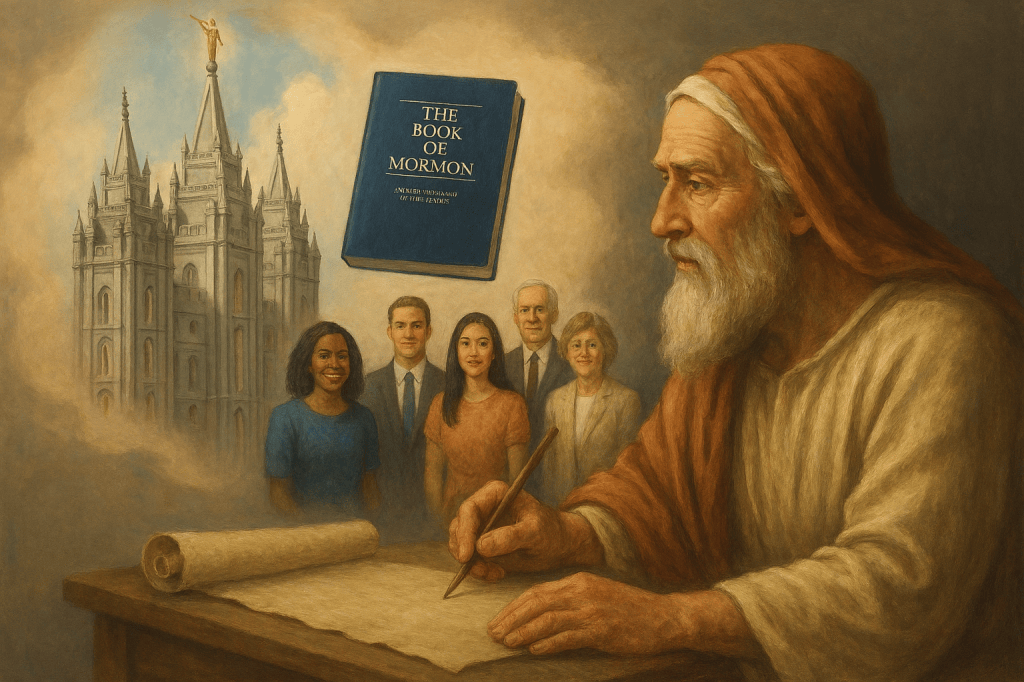
(Please note, the featured image was created by me using MS Copilot.)

